
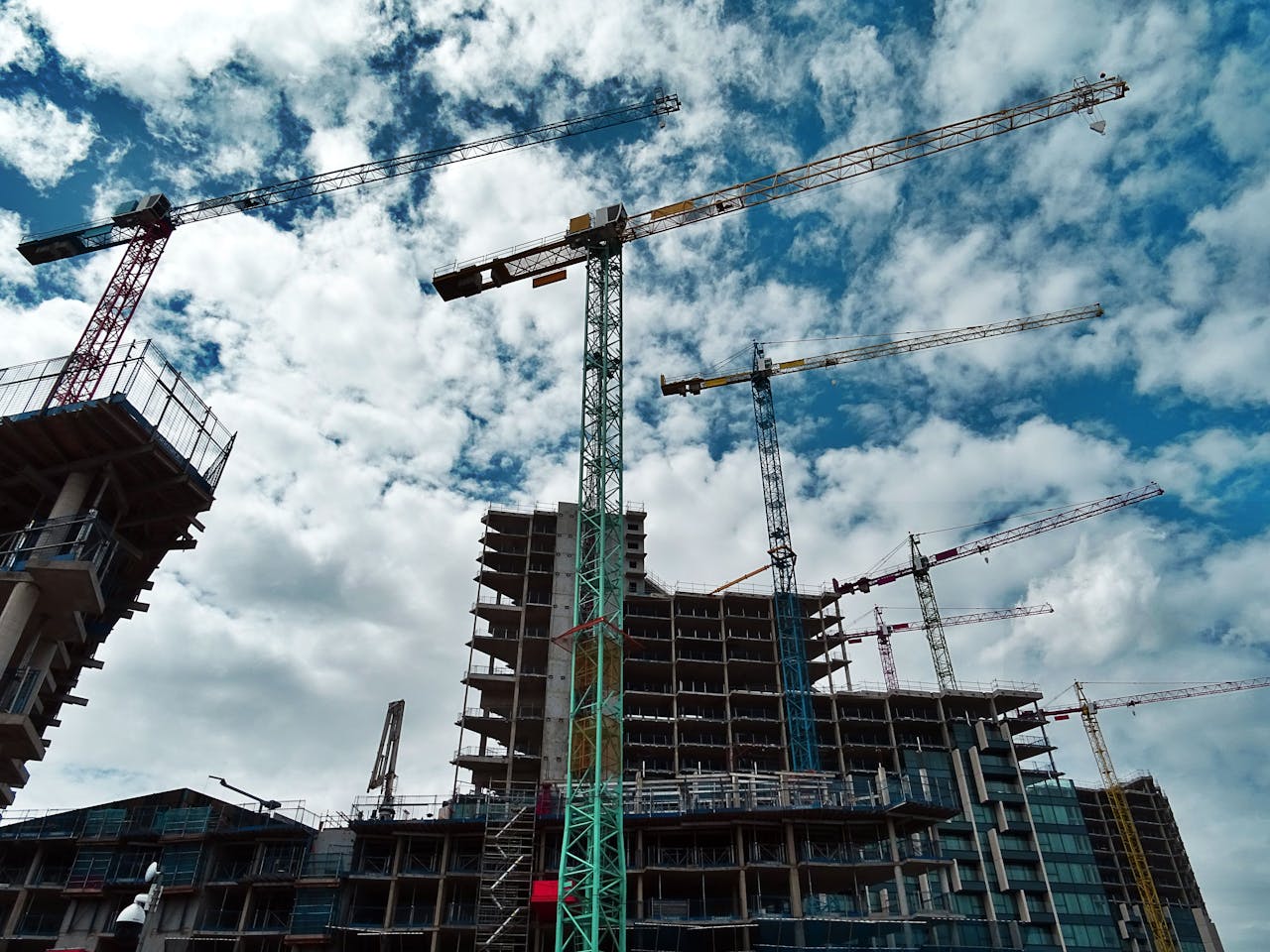
FRESH ROUND OF TARIFFS LIKELY TO HAVE A NEGATIVE IMPACT ON HOUSING
NOVEMBER 2025
This year has been marked by a notable and dramatic shift towards more protectionist trade policies, driven by the new presidential administration. Beginning in April 2025, President Trump’s “Liberation Day” introduced country specific, “reciprocal” tariffs which was a significant departure from decades of free trade policies.
In October, the administration announced a new round of product-specific tariffs targeting imported kitchen cabinets, bathroom vanities, wood, and furniture.
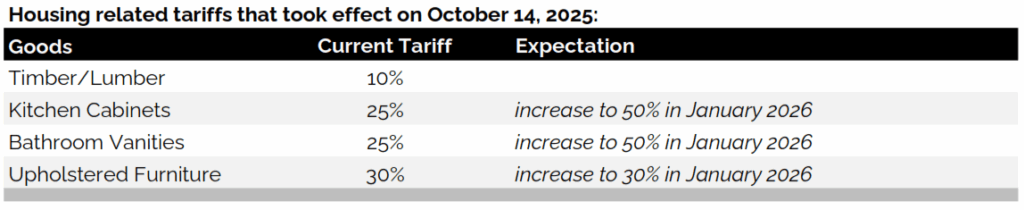
These come on top of existing country-specific tariffs, as well as other product-specific ones Trump imposed earlier this year including 50% on steel and copper imports.
What does this all mean for the housing market?
The National Association of Home Builders (NAHB) estimates that approximately 7% (or $14 billion worth) “of all goods used in new residential construction originate from a foreign nation.” This means that US home builders, many who have been waiting for interest rate relief, will undoubtably face higher construction costs now.
This comes at a particularly challenging time for the housing market, which has faced high relative interest rates in recent years which have locked in homeowners and softened existing home sales. Meanwhile single-family housing starts, which surged during the pandemic, have been trending downward over the last year.
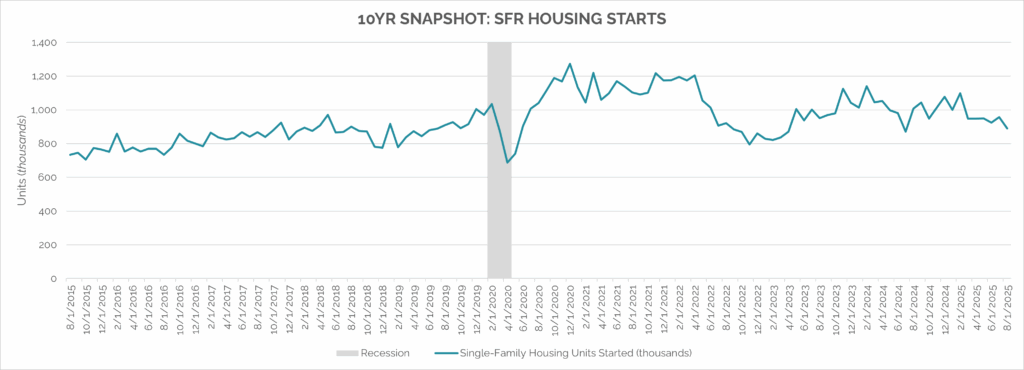
Tariffs are expected to create additional headwinds for the housing market and slow the pace of new construction. Lower-priced and affordable housing construction could be particularly impacted as these are already low-margin projects for developers. They will also likely have ripple effects on other areas of the market as renovating existing homes becomes more expensive and insurance increases because homes, and their components, would be more expensive to replace.
While tariffs on imported goods will bolster existing domestic manufacturers and production, it’s still important to note that many industries are globalized and even US-based manufacturers may depend on imported materials, hardware, or finishes. Overall, US consumers should expect to bear the brunt of tariff-driven costs. A recent Goldman Sachs study estimates that 55% of the cost of tariffs is passed on to consumers.
Looking ahead, given the uncertainty around and rapidity with which tariffs are imposed or altered, it will likely take time before the full effects of the country’s new trade policies are understood.
Sources:
National Association of Home Builders
U.S. Census Bureau and U.S. Department of Housing and Urban Development, New Privately-Owned Housing Units Started: Single-Family Units [HOUST1F], retrieved from FRED, Federal Reserve Bank of St. Louis
All information is from sources deemed reliable but no guarantee is made as to its accuracy. All material presented herein is intended for informational purposes only and is subject to human errors, omissions, changes or withdrawals without notice.