

WHY FED CUTS MAY NOT BRING THE HOUSING RELIEF BUYERS EXPECT
OCTOBER 2025
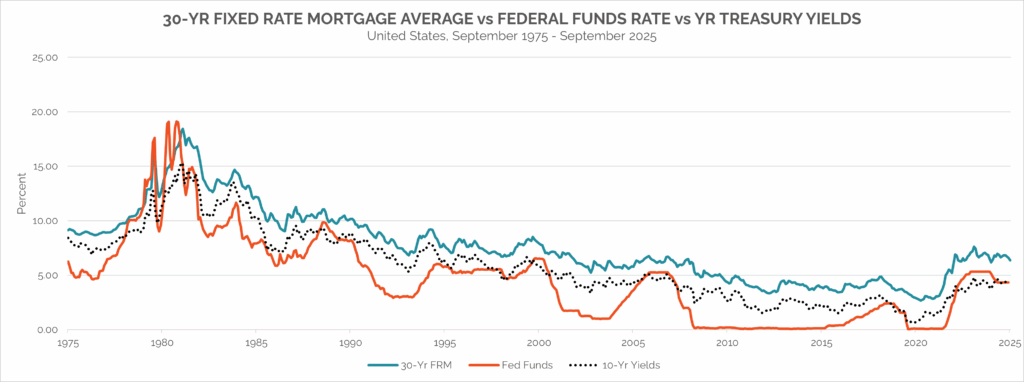
At its September meeting, the Federal Reserve cut its benchmark interest rate by a quarter-point in response to a cooling labor market. This is the bank’s first cut since last December, with officials signaling that two more rate cuts could follow later this year. While this will lower borrowing costs for Americans, the Federal Reserve’s interest rate decisions do not directly affect mortgage rates. Instead, they affect the rate that banks charge each other for borrowing money. Mortgage rates, specifically fixed-rates, are influenced by 10-year Treasury yields which already price in expectations about changes in the Fed’s target rate before an official announcement is made. Furthermore, bond yields are also influenced by numerous other forces impacting the global debt market.
What does this mean for the housing market?
Given the pre-emptive nature of mortgage rates, the most recent cut does not guarantee that borrowing costs for prospective home buyers will fall much more than they already had. As of mid-October, the 30-year fixed rate mortgage is 6.3%. While this is lower than the start of the year when rates hovered closer to 7%, it is still perceived as high by many prospective buyers.
According to the FHFA’s National Mortgage Database (NMDB), more than 81% of mortgages have a rate of 6% or lower. Meanwhile, about one-fifth of outstanding mortgages have an interest rate below 3%.
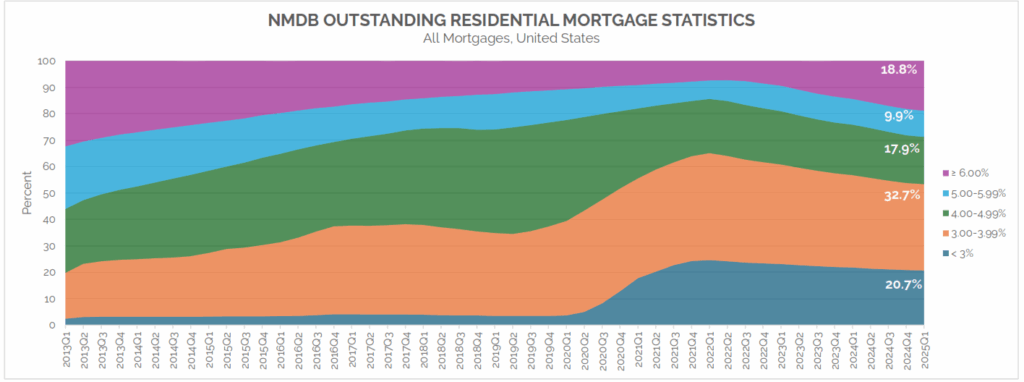
Many of the homeowners who secured exceptionally low mortgage rates during the height of the Covid-19 pandemic have been hesitant to sell their home. Whereas homeowners might typically have moved to upsize or downsize according to lifestyle needs after a few years, they are choosing to stay put thereby reducing available inventory across many cities and driving up home prices, a trend dubbed as the “lock-in-effect.”
Nevertheless, the housing market largely continues to move forward as mortgage rates are just one, albeit a major, factor in the decision to purchase a home. While many analysts don’t think mortgage rates will have a sea change impact on housing unless they fall below 3% again, there is some optimism that affordability constraints will ease and more people will get used to this new rate environment.
Looking ahead, we’re already seeing inventory increases across many cities compared to a year ago as well as more muted price growth, or in some cases modest declines. There is cautious optimism that together with potential rate cuts, these trends will ease affordability pressures, help unlock pent-up demand, and provide renewed momentum for the housing market.
All information is from sources deemed reliable but no guarantee is made as to its accuracy. All material presented herein is intended for informational purposes only and is subject to human errors, omissions, changes or withdrawals without notice.